Showing posts with label Dr. Brown. Show all posts

Monday, September 29, 2014

Football, Feet and More

Football season is in full swing, and whether it’s pro ball or pee-wee injuries are likely to occur. Even on the best day, with the most well trained athlete, accidents can happen, but we are here to help!

The most common injuries we see from team sports, like football, are plantar fasciitis, achilles tendonitis, neuromas, stress fractures and capsulitis. One of the most important things for athletes of all levels to remember is not to over-do it. The majority of injuries in athletes are what we call ‘overuse injuries’. 

More often than not injuries start off as small problems, which are easy to self-heal, however these injuries become exaggerated when the proper time-off/rest time isn’t observed.  With team sports it is sometimes hard to sit on the sidelines, but it can be a vast difference in the severity of your injury and your recovery time. 

At the first sign of pain, impact, swelling or chronic soreness it is important to not only seek medical treatment, but to adhere to your recovery plan for the best outcome. This is especially vital in younger athletes in order to avoid chronic or long-term foot and ankle damage. 

Dr. Saffer and Dr. Brown are experts in the fields of sports podiatry, and love working with youth to establish healthy and successful plans for an active future. Come see us today! 

Wednesday, September 17, 2014

Underpronating Can Lead to More Ankle Pain

Wondering why you keep spraining your ankle? It could be your shoes!

If you underpronate, your foot tends to roll to the outside when walking or running, you naturally have greater risk of ankle sprains. Not wearing shoes with the correct support for can lead to ankle sprains and stress fractures, torn ligaments and worse. When being fitted for athletic or active shoes make sure your gate is checked when walking and running for the best evaluation of your needs.

A correct assessment for shoes should contain the following:
- Asking questions about you! What will the shoes before, what’s your activity level, past injuries and so forth should all be addressed between you and your fit professional.

- Measurement. You should always have your feet measured for length and width. Feet can change sizes and one foot is always bigger than the other, a new purchase should not be based on your last shoe’s size.

- Gait Analysis. Your fit professional should observe you running and walking, either on a treadmill or designated area. A trained professional will determine your personal movement "map" from this process.  That "map" reveals the programming of everything happening within your body including your levels of mobility, stability, flexibility and functional strength. The analysis of all these different elements taken together is what creates a complete picture of a person's gait, and allows them to better understand the type of footwear you need. (*This is where it is decided on whether you under or over pronate.)

- Arch Analysis. Either by viewing your feet (without shoes) from various angles or by having you step on a arch pad your fit professional should measure your arch to determine the best shoe for you and your chosen activity, as well as the need for inserts and what type.

- Fitting. Try on the shoes with the socks you will most likely use. Run around the parking lot, bend, stretch, stand on your tip toes- move in the shoes and see how they feel. Tell your fit professional about any tight areas, slipping, rubbing or any other complaints- you need to find the shoe right for your foot, but that you also feel good in.

Dr. Brown and Dr. Saffer are both skilled in athletic shoes and fitting and are happy to sit down with you to discuss inserts, if your shoe is right for you and foot tips for your active life!

Find a professional fit equipped store near you with the Runners World Store Finder.

Thursday, August 14, 2014

Technology for your Toes

Most people don’t relate technology to the practice of podiatry.  However many tools greatly aid in the advancement of our treatments. At Carolina Foot Specialists we are proud to be able to offer the latest in treatment procedures, technological tools and continuing education for our staff.

Being able to provide our patients with in house digital x-rays and diagnostic ultrasounds have led to a much higher recovery rates and more accurate treatment plans. Diagnostic ultrasounds of the foot and ankle advance the prevention and treatment of wounds, detecting tendon and ligament pathology, and detecting soft tissue lesions and foreign bodies.


Digital x-rays provide instantaneous images for the doctors to review. The data is transferred to a computer where technicians can adjust the image for better quality, magnify the area that needs to be studied, or even decide if the image needs to be retaken.

For those who are concerned about the risks of radiation exposure, these digital
pictures are actually better than traditional X-rays.

Also, having the ability to custom make custom orthotics for individual issues and feet have greatly improved the health and well being of many of our patients.

While a lot of our work stems from knowledge and clinical diagnosis technology has not left podiatry behind. Come by and see us for happier feet and ankles today. 

Friday, August 8, 2014

Suffering from the Flat Foot Funk?

Flat feet are widely misunderstood, but not as severe as most think.

In a child’s foot the arch usually begins to form as they start standing on their toes and attempting to walk. Generally the absence of arch development is associated with pronation, a leaning inward of the ankle bones toward the center line. Shoes of children who pronate, when placed side by side, will lean toward each other (after they have been worn long enough for the foot position to remodel their shape). Most of these cases have no problems or pain associated with being flatfooted.

Adult-onset of flat feet, also known as painful progressive flatfoot or tibialis posterior tendonitis, refers to the inflammation of the tendon of the tibialis posterior. Left untreated, it may lead to severe disability and chronic pain. People are predisposed to tibialis posterior tendonitis if they have flat feet or an abnormal attachment of the tendon to the bones in the midfoot.

Along with conservative treatments such as icing, stretching and tapping Dr. Brown and Saffer are experts in custom orthotics to relief symptoms of painful progressive flat foot. Our own Dr. Saffer suffers with having Flat Feet but is still an avid 10k runner and athlete by using his knowledge of custom orthotic treatments.


Receive personal, local and expert care with Carolina Foot Specialists. 

Wednesday, July 30, 2014

Myth: Warts are for Witches

Warts come with a stigma of being unclean and nasty. People tend relate warts to an ugly witch with a big wart on her nose, while warts are contagious they are a natural reaction caused by our body, and not always a sign of bad hygiene.
A wart is caused by a viral infection (HPV) which invades the skin through small or invisible cuts and abrasions; which is why you see warts more commonly on children and youth. The virus causes the top layer of skin to grow rapidly, creating the wart.

Foot warts are generally raised and fleshy and can appear anywhere on the foot or toes. Occasionally, warts can spontaneously disappear after a short time, and then, just as frequently, they recur in the same location. It is important to note that warts can be very resistant to treatment and have a tendency to reoccur. Over-the-counter foot wart treatments are usually ineffective because their use can inadvertently destroy surrounding healthy tissue.

 Please contact our office for help in effectively treating warts. Our practice is expert in recommending the best treatment for each patient, ranging from prescription ointments or medications to, in the most severe cases, laser cautery.

Monday, July 21, 2014

Diabetes And Your Podiatrist

If you're diabetic you have a lot on your plate. Monitoring your insulin, watching your diet, finding time for exercise and regular check ups with your physician. We know it can be hard to stay on top of your health, but the importance of adding regular visits (every 3-4 months) to your trusted podiatrist can make a world of difference.

Diabetics are more prone to various foot problems than those without diabetes due to the development of painful nerve damage called peripheral neuropathy. This damage to your nerves can cause the loss of feeling in your feet, making it difficult to detect extreme temperatures and pain as easily, or readily, as someone who does not have diabetes. As a result, you could sustain a serious cut or wound and not even notice your foot is injured until an infection begins.
A podiatrist can provide a more thorough exam and detect any signs of changes, such as broken skin or ulcers that can be detrimental to the health of your feet and body. Your podiatrist can also check for areas of high pressure or loss of blood circulation.

Give us a call today to start taking charge of your health: 843-654-8250.

Wednesday, July 9, 2014

Are Pedicures Really to Blame?

So what harm can a pedicure really do? What are the pesky culprits behind the danger of a pedicure? One Word: Dermatophytes.

Dermatophytes are the main fungus responsible for nail infections, and is also the same fungus which causes athletes foot. While most cases are caused by this fungus the actual 'type' of infection can vary with severity and symptoms. For details on each type visit here. 

The most commonly seen fungal infection is called Distal Subungual Onychomycosis (DSO). In this case the infection starts at the end of the nail bed, and part of the nail often turns yellow or white, and may thicken. Pieces of skin and nail fragments build up under the nail. As the condition gets worse, the nail may crumble and split, and it may separate from the skin. This condition can progress at a fast pace if not diagnosed and treated promptly.

How can a pedicure cause you an infection? 
It’s not just about the salon; it’s also about the condition of your feet. You do need to be certain your salon sanitizes properly, but their uncleanliness isn’t all to blame. Bacteria and fungus live everywhere, and sometimes even fight through the harshest chemicals. Due to this you need to be proactive. Don’t get a pedicure if you have any cuts, scrapes, scabs, sore spots, inflammation, etc. on your feet or legs (within pedicure territory). The living bacteria and fungus are given a gateway to infection through these areas. If your immune system isn’t strong enough or the strand is particularly stubborn you will end up fighting a long road of infection. For extra tips on a safe pedicure visit our previous blog post: Keeping Your Toes Pretty for Spring.

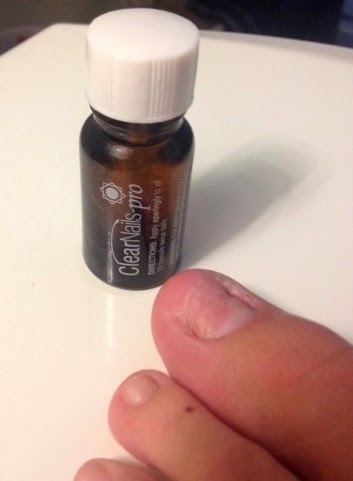
At Carolina Foot Specialists we offer many treatment options including topical antifungal treatment, oral antifungal treatment, nail avulsion, and laser treatment of the toenails. The majority of cases, if caught early enough, can be treated with nail trimming and topical antifungal medication- we recommend a product called ClearNails-pro, available at our office. 


Are you seeing signs of a fungal infection? Call us today!
Charleston Office*843-225-5575 Mount Pleasant Office*843-654-8250