Friday, August 8, 2014

Suffering from the Flat Foot Funk?

Flat feet are widely misunderstood, but not as severe as most think.

In a child’s foot the arch usually begins to form as they start standing on their toes and attempting to walk. Generally the absence of arch development is associated with pronation, a leaning inward of the ankle bones toward the center line. Shoes of children who pronate, when placed side by side, will lean toward each other (after they have been worn long enough for the foot position to remodel their shape). Most of these cases have no problems or pain associated with being flatfooted.

Adult-onset of flat feet, also known as painful progressive flatfoot or tibialis posterior tendonitis, refers to the inflammation of the tendon of the tibialis posterior. Left untreated, it may lead to severe disability and chronic pain. People are predisposed to tibialis posterior tendonitis if they have flat feet or an abnormal attachment of the tendon to the bones in the midfoot.

Along with conservative treatments such as icing, stretching and tapping Dr. Brown and Saffer are experts in custom orthotics to relief symptoms of painful progressive flat foot. Our own Dr. Saffer suffers with having Flat Feet but is still an avid 10k runner and athlete by using his knowledge of custom orthotic treatments.


Receive personal, local and expert care with Carolina Foot Specialists. 

Wednesday, July 30, 2014

Myth: Warts are for Witches

Warts come with a stigma of being unclean and nasty. People tend relate warts to an ugly witch with a big wart on her nose, while warts are contagious they are a natural reaction caused by our body, and not always a sign of bad hygiene.
A wart is caused by a viral infection (HPV) which invades the skin through small or invisible cuts and abrasions; which is why you see warts more commonly on children and youth. The virus causes the top layer of skin to grow rapidly, creating the wart.

Foot warts are generally raised and fleshy and can appear anywhere on the foot or toes. Occasionally, warts can spontaneously disappear after a short time, and then, just as frequently, they recur in the same location. It is important to note that warts can be very resistant to treatment and have a tendency to reoccur. Over-the-counter foot wart treatments are usually ineffective because their use can inadvertently destroy surrounding healthy tissue.

 Please contact our office for help in effectively treating warts. Our practice is expert in recommending the best treatment for each patient, ranging from prescription ointments or medications to, in the most severe cases, laser cautery.

Friday, July 25, 2014

Foot Health for Baby Boomers

Baby Boomers are the largest generation, and our healthcare is beginning to majorly center around their needs. Taking care of an aged foot is essential to overall health. What problems do feet endure with time? An article from the 'Oregonian' explains...

Age-linked woes 
Andy Dworkin
"Fallen arches are just one of many age-related foot problems. Time can also twist lesser toes, said Dr. Michael Kennedy, an Oregon Health & Science University orthopedist. Opposing muscles usually balance to hold the toes in place, Kennedy said. But over the years, the bigger, outer muscles can overpower the weaker, inner muscles, causing toes to bend up at the first joint (hammertoe) or last (mallet toe), or even curl into a claw toe.

Age can also bring arthritis, especially in ankles and big toes, and thin the padding of the sole, worsening corns, Kennedy said. Years of wearing too-tight shoes can also worsen the common foot woe called bunions -- genetically inherited flaws which make
bony bumps that misalign the big toe. Extra weight courts a few serious foot problems. One is plantar fasciitis, a leading cause of heel pain commonly seen in people just 20 or 30 pounds overweight, Bookwalter said. In that ailment, a heel-to-toe band of tissue called the plantar fascia gets inflamed, causing pain, especially in the morning. Women, runners and people who stand for work are at extra risk."

As you can see the feet can hinder your health in many ways. If you are having any pain or signs of the above come see us today. Age can be just a number! 

Monday, July 21, 2014

Diabetes And Your Podiatrist

If you're diabetic you have a lot on your plate. Monitoring your insulin, watching your diet, finding time for exercise and regular check ups with your physician. We know it can be hard to stay on top of your health, but the importance of adding regular visits (every 3-4 months) to your trusted podiatrist can make a world of difference.

Diabetics are more prone to various foot problems than those without diabetes due to the development of painful nerve damage called peripheral neuropathy. This damage to your nerves can cause the loss of feeling in your feet, making it difficult to detect extreme temperatures and pain as easily, or readily, as someone who does not have diabetes. As a result, you could sustain a serious cut or wound and not even notice your foot is injured until an infection begins.
A podiatrist can provide a more thorough exam and detect any signs of changes, such as broken skin or ulcers that can be detrimental to the health of your feet and body. Your podiatrist can also check for areas of high pressure or loss of blood circulation.

Give us a call today to start taking charge of your health: 843-654-8250.

Wednesday, July 9, 2014

Are Pedicures Really to Blame?

So what harm can a pedicure really do? What are the pesky culprits behind the danger of a pedicure? One Word: Dermatophytes.

Dermatophytes are the main fungus responsible for nail infections, and is also the same fungus which causes athletes foot. While most cases are caused by this fungus the actual 'type' of infection can vary with severity and symptoms. For details on each type visit here

The most commonly seen fungal infection is called Distal Subungual Onychomycosis (DSO). In this case the infection starts at the end of the nail bed, and part of the nail often turns yellow or white, and may thicken. Pieces of skin and nail fragments build up under the nail. As the condition gets worse, the nail may crumble and split, and it may separate from the skin. This condition can progress at a fast pace if not diagnosed and treated promptly.

How can a pedicure cause you an infection? 
It’s not just about the salon; it’s also about the condition of your feet. You do need to be certain your salon sanitizes properly, but their uncleanliness isn’t all to blame. Bacteria and fungus live everywhere, and sometimes even fight through the harshest chemicals. Due to this you need to be proactive. Don’t get a pedicure if you have any cuts, scrapes, scabs, sore spots, inflammation, etc. on your feet or legs (within pedicure territory). The living bacteria and fungus are given a gateway to infection through these areas. If your immune system isn’t strong enough or the strand is particularly stubborn you will end up fighting a long road of infection. For extra tips on a safe pedicure visit our previous blog post: Keeping Your Toes Pretty for Spring.

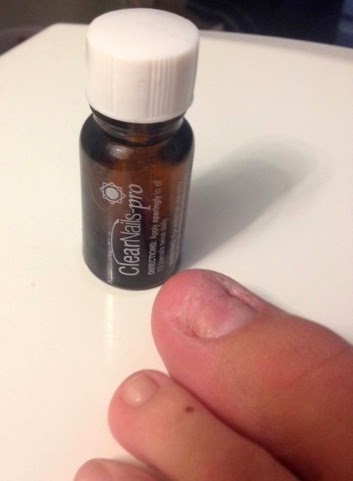
At Carolina Foot Specialists we offer many treatment options including topical antifungal treatment, oral antifungal treatment, nail avulsion, and laser treatment of the toenails. The majority of cases, if caught early enough, can be treated with nail trimming and topical antifungal medication- we recommend a product called ClearNails-pro, available at our office. 


Are you seeing signs of a fungal infection? Call us today!
Charleston Office*843-225-5575 Mount Pleasant Office*843-654-8250


Thursday, June 26, 2014

Blisters: Your Body's way of Healing

Blisters. We’ve all dealt with them. Whether it’s due to incorrectly fitted footwear, prolonged rubbing or sweating, these pesky little bubbles are a pain in the … foot! 

Blisters result from a hot spot, a place on your skin that is irritated from rubbing, friction or pressure. In the summer your feet tends to sweat more creating increased opportunities for blisters to form. This continual focused irritation causes actual tiny tears in your epidermis (outermost layer of skin). As a healing mechanism your body sends fluids to fill the gap between the layers of skin, to protect the sensitive skin now exposed.


Ideally you want to leave a blister alone to heal. Your body is an amazing organism and sufficiently takes care of itself when allowed to do so. The bubble a blister forms is actually protecting your irritated skin from bacteria and infection, as well as from pain. When left alone new, healthy skin will form under the blister and the fluid will absorb back into the body.  For a normal everyday blister- there is no immediate need to seek medical help.
*Occasionally one can develop blood blisters, where the blister is filled with blood not plasma, or a blister can be filled with thicker, discolored fluid indicating infection. If you notice these signs please seek medical help. 

If the blister is in a particularly nagging area or is very painful you may need to pop the blister. While we do not recommend this, we understand sometimes it cannot be avoided. Taking proper steps and precautions can make all the difference.
  • Wash hands with soap and warm water
  • Wash blister and surrounding area with antibacterial soap and water
  • Dry area completely
  • Sterilize a thin, pin sized, needle with alcohol
  • Gentley poke a hole in the side of the blister
  • Squeeze out all fluid (If the fluid is not clear it may be sign of infection and you need to see a medical professional)
  • Do NOT remove extra skin from blister, this provides a protective barrier from infection
  • Apply an antibiotic cream or ointment
  • If needed apply bandage, loosely, over area


 We also recommend you clean and check affected area often to catch any signs of infection early.

Have a problem with a blister? Come see us for the appropriate treatment for you! 

Friday, June 20, 2014

Barefoot: Safe or Sorry?

It is summertime in Charleston. Weather is warm, sun is shining and the grass is plush and green- so the question remains… do we really need shoes?

Like so many other questions there isn’t one simple conclusive answer. 

Many studies today are promoting ‘earthing’- the practice of walking barefoot on natural surfaces, such as sand, soil, grass etc.  Early studies are showing that the health benefits come from the relationship between our bodies and the electrons in the earth. The planet has its own natural charge, and we seem to do better when we’re in direct contact with it,” via MindBodyGreen.com.


Aside from the natural link of walking barefoot, doing so can also expose your feet to substantial injury, infections and bacteria. Also, walking barefoot at the beach can expose your feet to burns from the sand or pavement.

Since the age of man the invention of shoes has decreased the function of the feet. Meaning that the first humans’ feet were more durable, less sensitive and tougher in structure- by shoeing feet our general foot structure has evolved over time to need more support and protection.

Being barefoot is freeing and, when done safely, is completely okay. However the idea that we can go shoeless as our ancestors did is not realistic.  

When going barefoot remember these tips:
- Wear sunscreen on your feet
- Properly bandage any open wounds or scrapes (or wear shoes until wounds are healed to avoid infections)
- Avoid going barefoot in extra germy environments such as public pools, waterparks and docks (always clean & dry feet well before putting shoes back on)

- Wear shoes on any rough surfaces such as pavement, cement, splintery docks and so forth