Showing posts with label Heel pain. Show all posts
Showing posts with label Heel pain. Show all posts
Friday, October 12, 2018
Friday, January 23, 2015
Cross Training- Friend or Foe?
Whether you're recovering from the Charleston Marathon/Half, preparing for the Cooper River Bridge Run or just simply a routine runner you should ALWAYS make sure you are Cross Training (yes, even if you aren't preparing for an event).
 "Cross Training builds strength and flexibility in muscles that running doesn't utilize. It prevents injury by correcting muscular imbalances. Runners have their obvious strengths: power, endurance, tenacity. But within those strengths lies the potential for weakness: quads that overpower our hamstrings, neglected upper bodies, and poor flexibility—qualities that could lead to problems and/or injuries." ~ Runners World
Cross-Training could be swimming, biking, yoga, pilates, weight lifting, walking or other forms of aerobic training. Cross-training days should be considered easy days that allow you to recover from the running you do the rest of the week.
If you are suffering from shin splints, heel pain, achey ankles or feet it may be due to a lack of cross training. By seeing us we can evaluate your problem and have you back on your feet in no time!
Charleston Office~Dr. Adam Brown
615 Wesley Dr. Ste 340 Charleston, SC 29407 (843)-225-5575
Mt. Pleasant Office~Dr. Andrew Saffer
501 Bramson Ct. Ste 301 Mt Pleasant, SC 29464 (843)-654-8250
"Cross Training builds strength and flexibility in muscles that running doesn't utilize. It prevents injury by correcting muscular imbalances. Runners have their obvious strengths: power, endurance, tenacity. But within those strengths lies the potential for weakness: quads that overpower our hamstrings, neglected upper bodies, and poor flexibility—qualities that could lead to problems and/or injuries." ~ Runners WorldCross-Training could be swimming, biking, yoga, pilates, weight lifting, walking or other forms of aerobic training. Cross-training days should be considered easy days that allow you to recover from the running you do the rest of the week.
If you are suffering from shin splints, heel pain, achey ankles or feet it may be due to a lack of cross training. By seeing us we can evaluate your problem and have you back on your feet in no time!
Charleston Office~Dr. Adam Brown
615 Wesley Dr. Ste 340 Charleston, SC 29407 (843)-225-5575
Mt. Pleasant Office~Dr. Andrew Saffer
501 Bramson Ct. Ste 301 Mt Pleasant, SC 29464 (843)-654-8250
Wednesday, December 31, 2014
Fixing Heel Fissures
Dry, cracked heels (known as heel fissures) can not only be unsightly, but can often be source of pain and embarrassment. Did you know a podiatrist can remove the dead skin from your feet leaving them soft, smooth and pain free?
While most cracking and splitting is ultimately caused by dry skin, there can be more to the problem than meets the eye. Most dry skin left untreated on the heels leads to thickening of the skin, also known as calluses, which crack and break under pressure. A podiatrist can safely remove the thickened skin, without risking infection, provide you with information on what sort of creams are best for your skin type as well as rule out more serious health conditions. While patients suffering from heel fissures are more comfortable in open backed shoes or flip flops this footwear actually tends to leave the feet exposed to dry air making the problem worse.
 Genetics, skin conditions such as psoriasis, obesity, pregnancy, walking gait, ill fitted shoes, climate, diseases and hormone imbalances can all play a role in heel fissures. Some people also have a large fatty pad on the sole of their feet, which requires more elasticity in the skin to expand without cracking making their feet more susceptible to heel fissures.
At home treatments and DIY suggestions can be helpful, but once heel fissures become severe and include deep painful cracking and bleeding infection becomes a big risk. Heel fissures flare up with winter and cause many people pain. Erase your aches by seeing us.
Call for an appointment today!
West Ashley: 843-225-5575
Mount pleasant: 843-654-8250
While most cracking and splitting is ultimately caused by dry skin, there can be more to the problem than meets the eye. Most dry skin left untreated on the heels leads to thickening of the skin, also known as calluses, which crack and break under pressure. A podiatrist can safely remove the thickened skin, without risking infection, provide you with information on what sort of creams are best for your skin type as well as rule out more serious health conditions. While patients suffering from heel fissures are more comfortable in open backed shoes or flip flops this footwear actually tends to leave the feet exposed to dry air making the problem worse.
At home treatments and DIY suggestions can be helpful, but once heel fissures become severe and include deep painful cracking and bleeding infection becomes a big risk. Heel fissures flare up with winter and cause many people pain. Erase your aches by seeing us.
Call for an appointment today!
West Ashley: 843-225-5575
Mount pleasant: 843-654-8250
Friday, December 26, 2014
Avoid New Year's 'Shoe-icide'
New Year's Eve planning is in full force. It's a great night to dress up, add some extra sparkle and take on the town, but before you buy those sky high heels to go with your perfect dress there are some things you should know.
- 42% of women admitted they'd wear a shoe they liked even if it gave them discomfort.
- 73% admitted already having a shoe-related foot issue.
- High heels don't cause bunions, but they can aggravate them.
- Feet change with age. Over the years a loss of fat in the bottom of the foot makes higher heels less comfortable than they were in your youth.
- The ultra narrow heels of stilettos are particularly risky, pinpointing weight on one area and creating a less stable stance.
- The average woman gets foot pain after a mere hour in pumps.
- Research shows four-inch stilettos can up the amount of pressure on the front of the foot by 30% or more.
- Any heels 3 inches or higher can shorten the Achilles tendon just by wearing them once or twice a week.
Monday, November 17, 2014
Pain Free is an Option
Are you one of the many individuals suffering from chronic
heel pain? Any pain that lasts more than a few consecutive days should be
treated by a professional. Don’t let the fear of treatment sway you from coming
to see us. No matter the extreme or cause Carolina Foot Specialists will make
sure you have the knowledge you need to make the best decisions for your route
to being pain free.
What are some options?
Padding and strapping.
Placing pads in the shoe softens the impact of walking. Strapping helps support the foot and reduce strain on the fascia.
Placing pads in the shoe softens the impact of walking. Strapping helps support the foot and reduce strain on the fascia.
Orthotic devices.
Custom orthotic devices that fit into your shoe help correct the underlying structural abnormalities causing the plantar fasciitis
Custom orthotic devices that fit into your shoe help correct the underlying structural abnormalities causing the plantar fasciitis
Injection therapy.
In some cases, corticosteroid injections are used to help reduce the inflammation and relieve pain.
In some cases, corticosteroid injections are used to help reduce the inflammation and relieve pain.
Removable walking cast.
A removable walking cast may be used to keep your foot
immobile for a few weeks to allow it to rest and heal.
Night splint.
Wearing a night splint allows you to maintain an extended stretch of the plantar fascia while sleeping. This may help reduce the morning pain experienced by some patients.
Wearing a night splint allows you to maintain an extended stretch of the plantar fascia while sleeping. This may help reduce the morning pain experienced by some patients.
Physical therapy.
Exercises and other physical therapy measures may be used to help provide relief.
Exercises and other physical therapy measures may be used to help provide relief.
West Ashley: 843-225-5575
Mount pleasant: 843-654-8250
Thursday, November 6, 2014
Treating Calcaneal Apophysitis with Dr. Saffer- Say goodbye to Heel Pain
Last week we spent some time with College of Charleston alumni and former basketball star, Jermel President filming a spot for his streamed broadcast, DAE TV. Jermel approached us to discuss some common issues in student athletes (of all ages and abilities), as well as learn more about sports podiatry in general.
One of our case discussions focused on one of Dr. Saffer's former patients, Aaron Thornton, an active teenager, that was suffering from chronic heel pain. Aaron was diagnosed with Calcaneal Apophysitis (inflammation of the growth plate in the heel) a common issue in kids and young teens, especially those active in athletics.

We most often see this in patients 8 to 14 years old. The growth plate in the heel is not fully developed until the average age of 14, and most high impact athletic habits begin around the age of 8; but this is not to say it doesn't happen in younger or older cases- every one grows at a different rate.
The heel’s growth plate is sensitive to repeated running and pounding on hard surfaces, resulting in muscle strain and inflamed tissue. If a child is very active in sports before his/her growth plate has fully developed Calcaneal Apophysitis is a risk. While some may be prone to this issue due to their foot structure you can minimize the risk by helping your child or teen maintain a healthy weight, wear only properly fitted, supportive shoes that are appropriate for the chosen activity, limit the use of cleated athletic shoes until age 14 and by ensuring they don't endure activity, training or practice above their ability and age.

We are happy to say that after proper evaluation Aaron's case was treated with custom made sports orthotics and he is now back to being a kid and pain free!
If you know a youth suffering with heel pain, let us help. Call to schedule an appointment today
West Ashley: 843-225-5575
Mount pleasant: 843-654-8250
*Catch Dr. Saffer's full interview streaming on November 9th at 7:20pm via DAE-TV.
One of our case discussions focused on one of Dr. Saffer's former patients, Aaron Thornton, an active teenager, that was suffering from chronic heel pain. Aaron was diagnosed with Calcaneal Apophysitis (inflammation of the growth plate in the heel) a common issue in kids and young teens, especially those active in athletics.
We most often see this in patients 8 to 14 years old. The growth plate in the heel is not fully developed until the average age of 14, and most high impact athletic habits begin around the age of 8; but this is not to say it doesn't happen in younger or older cases- every one grows at a different rate.
The heel’s growth plate is sensitive to repeated running and pounding on hard surfaces, resulting in muscle strain and inflamed tissue. If a child is very active in sports before his/her growth plate has fully developed Calcaneal Apophysitis is a risk. While some may be prone to this issue due to their foot structure you can minimize the risk by helping your child or teen maintain a healthy weight, wear only properly fitted, supportive shoes that are appropriate for the chosen activity, limit the use of cleated athletic shoes until age 14 and by ensuring they don't endure activity, training or practice above their ability and age.
We are happy to say that after proper evaluation Aaron's case was treated with custom made sports orthotics and he is now back to being a kid and pain free!
If you know a youth suffering with heel pain, let us help. Call to schedule an appointment today
West Ashley: 843-225-5575
Mount pleasant: 843-654-8250
*Catch Dr. Saffer's full interview streaming on November 9th at 7:20pm via DAE-TV.
Friday, October 31, 2014
Frightening Shoes For Your Feet
We loved this Halloween spirited blog from SHOES-n-FEET- Enjoy & have a great Halloween!
Top 5 Most Frightening Shoes For Halloween Feet

The jack o’lanterns have been carved and the candy has been set out – Halloween has finally arrived! By now many of you have put together a costume and are planning to dress up for trick or treating with the kids, a parade in your community or a contest at work.
While Halloween costumes may run the gamut from scary to sweet and store bought to homemade (nothing like quality time with the glue gun!), many of them will no doubt include some special footwear. “The shoes make the outfit” rings especially true when it comes to Halloween!
Since you can’t pull off a perfect ballerina costume without a pair of ballet slippers (a better option than painful pointe shoes), we’ve decided to rank the top five Halloween shoes that are a “trick” to wear – and leave your feet in need of a “treat”!
1. Witch Shoes
Witches are known to be cranky and mean and now we know why - their feet must be screaming in agony! The high heel concentrates pressure on the toes, which are shoved together in a pointed narrow toe box. These shoes cause extra stress on the ball and forefront of the foot. If you come across a witch’s feet, expect to find bunions and hammertoes. A witch’s time would certainly be best spent on mixing potions to ease the aches and pains, rather than on wreaking havoc. No wonder older witches are more evil; after hundreds of years in these shoes, you’d be pretty unpleasant, too.
2. Clown Shoes
Clowns have the opposite problem than witches: their shoes have too much space. The super-wide toe boxes found on clown shoes can cause feet to slide around in the shoe, resulting in painful blisters. The big shoes may be the key to why clowns are so likely to trip and fall all the time – it’s nearly impossible for them to catch their footing in these. Even worse for clowns with problems with their arches? The strange size and shape of clown shoes make it especially hard to fit for orthotics and insoles. Definitely explains why there are so many sad clowns at the circus.
3. Roman-style Sandals
Found on toga fans, goddesses and gladiators alike, these sandals offer little in the way of arch support. The flat sole causes great strain on the Achilles tendon that run up the back of the heel, and the minimal cushioning provides zero-to-no shock absorption when the feet hit the ground. Wearers should be careful with the laces that crisscross their way past the ankle and up to the calf. Tying them too tight may cut off circulation, especially for those warriors battling to the death in the Coliseum.
4. Go Go Boots
Austin Powers loved women in go go boots, but did they love wearing those shoes? We think not. While we are thankful they have a platform heel, as opposed to a stiletto, the high heel of this retro footwear makes us nervous. They might be a bit more stable, but the benefits of this detail go out the window when the disco dancers start shaking their groove thang. These shoes and the way they fit so tightly on the foot and calf; depending on what material the boots are made of, they may not offer a lot of breathability, resulting in some seriously sweaty and smelly feet.
5. Scuba Diver Flippers
There’s really only one thing to say here: unless you are spending your Halloween underwater along with some costumed mermaids, you shouldn’t be in flippers. You don’t see divers strolling down the sidewalk in their swimfins, do you? Wear these on dry land and you’re asking to trip and fall on your face. Not too even mention the stench that will come from the rubber and your sweaty feet.
Top 5 Most Frightening Shoes For Halloween Feet
The jack o’lanterns have been carved and the candy has been set out – Halloween has finally arrived! By now many of you have put together a costume and are planning to dress up for trick or treating with the kids, a parade in your community or a contest at work.
While Halloween costumes may run the gamut from scary to sweet and store bought to homemade (nothing like quality time with the glue gun!), many of them will no doubt include some special footwear. “The shoes make the outfit” rings especially true when it comes to Halloween!
Since you can’t pull off a perfect ballerina costume without a pair of ballet slippers (a better option than painful pointe shoes), we’ve decided to rank the top five Halloween shoes that are a “trick” to wear – and leave your feet in need of a “treat”!
1. Witch Shoes
Witches are known to be cranky and mean and now we know why - their feet must be screaming in agony! The high heel concentrates pressure on the toes, which are shoved together in a pointed narrow toe box. These shoes cause extra stress on the ball and forefront of the foot. If you come across a witch’s feet, expect to find bunions and hammertoes. A witch’s time would certainly be best spent on mixing potions to ease the aches and pains, rather than on wreaking havoc. No wonder older witches are more evil; after hundreds of years in these shoes, you’d be pretty unpleasant, too.
2. Clown Shoes
Clowns have the opposite problem than witches: their shoes have too much space. The super-wide toe boxes found on clown shoes can cause feet to slide around in the shoe, resulting in painful blisters. The big shoes may be the key to why clowns are so likely to trip and fall all the time – it’s nearly impossible for them to catch their footing in these. Even worse for clowns with problems with their arches? The strange size and shape of clown shoes make it especially hard to fit for orthotics and insoles. Definitely explains why there are so many sad clowns at the circus.
3. Roman-style Sandals
Found on toga fans, goddesses and gladiators alike, these sandals offer little in the way of arch support. The flat sole causes great strain on the Achilles tendon that run up the back of the heel, and the minimal cushioning provides zero-to-no shock absorption when the feet hit the ground. Wearers should be careful with the laces that crisscross their way past the ankle and up to the calf. Tying them too tight may cut off circulation, especially for those warriors battling to the death in the Coliseum.
4. Go Go Boots
Austin Powers loved women in go go boots, but did they love wearing those shoes? We think not. While we are thankful they have a platform heel, as opposed to a stiletto, the high heel of this retro footwear makes us nervous. They might be a bit more stable, but the benefits of this detail go out the window when the disco dancers start shaking their groove thang. These shoes and the way they fit so tightly on the foot and calf; depending on what material the boots are made of, they may not offer a lot of breathability, resulting in some seriously sweaty and smelly feet.
5. Scuba Diver Flippers
There’s really only one thing to say here: unless you are spending your Halloween underwater along with some costumed mermaids, you shouldn’t be in flippers. You don’t see divers strolling down the sidewalk in their swimfins, do you? Wear these on dry land and you’re asking to trip and fall on your face. Not too even mention the stench that will come from the rubber and your sweaty feet.
Tuesday, October 21, 2014
Say Goodbye to Soreness with Carolina Foot Specialists
So you walked around at the Fall Festival all day, you ran a long training run or you work on your feet all day, and your feet hurt, it seems normal right? Maybe.
After prolonged time on your feet, especially in ill-equipped footwear or new shoes, your feet may ache, but the discomfort should be temporary and minor. Often we see patients who have had pain in their feet for weeks or even months but disregard the sensation as 'normal'. We recommend seeing a professional if your foot pain lasts more than a few days.
Often chronic pain synonymous with 'sore feet' can be symptoms of Planter Faciitis or a Morton's Neuroma. Planter Faciitis localizes on the heel of the foot where a Morton's Neuroma is felt more on the ball of the foot. Planter Faciitis is more common in patients with arch extremes (ie: flat feet or high arches) but can develop in normal arched feet from over-use or wearing particularly flat, unsupportive shoes such as flip flops. A Morton's Neuroma is caused by nerve irritation commonly on the ball of the foot, often found in women who regularly wear tight, high heeled shoes.
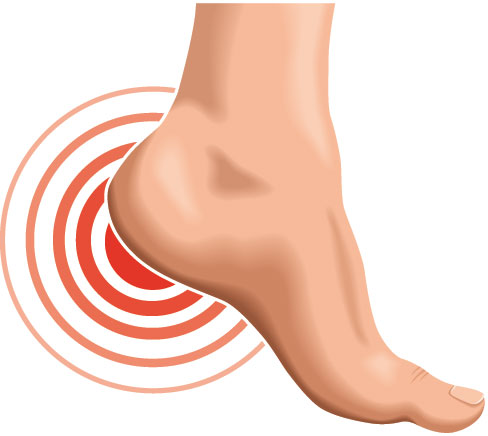 Pain from both of these conditions can flare up during certain activities, times of day or in conjunction with certain shoes making patients think circumstance is to blame rather than a medical condition. However both can worsen with use if not treated, making conservative and quick treatment more difficult in the long run.
If you have suffered from heel pain, pain on the ball of your foot or overall foot 'soreness' for more than a few consecutive days it is always better to stop in and see us than risk further injury or severity. We will do our best to ensure you are on the right path to being pain free!
www.CarolinaFootSpecialists.net
843-225-5575
After prolonged time on your feet, especially in ill-equipped footwear or new shoes, your feet may ache, but the discomfort should be temporary and minor. Often we see patients who have had pain in their feet for weeks or even months but disregard the sensation as 'normal'. We recommend seeing a professional if your foot pain lasts more than a few days.
Often chronic pain synonymous with 'sore feet' can be symptoms of Planter Faciitis or a Morton's Neuroma. Planter Faciitis localizes on the heel of the foot where a Morton's Neuroma is felt more on the ball of the foot. Planter Faciitis is more common in patients with arch extremes (ie: flat feet or high arches) but can develop in normal arched feet from over-use or wearing particularly flat, unsupportive shoes such as flip flops. A Morton's Neuroma is caused by nerve irritation commonly on the ball of the foot, often found in women who regularly wear tight, high heeled shoes.
If you have suffered from heel pain, pain on the ball of your foot or overall foot 'soreness' for more than a few consecutive days it is always better to stop in and see us than risk further injury or severity. We will do our best to ensure you are on the right path to being pain free!
www.CarolinaFootSpecialists.net
843-225-5575
Thursday, October 16, 2014
One Size Does Not Fit All
When most people think of orthotics they either think of the elderly population (scooting around in their orthotic white tennis shoes) or everyday WalMart sold shoe inserts (cue 'I'm gellin'). However, many of our patients are surprised at the effectiveness of using a correctly fitted custom orthotic.
At Carolina Foot Specialists we use a plaster mold, or digital mapping, of your foot (done in a quick office visit) to write a detailed 'prescription' for our fabrication company. Using your actual foot's details and our medical advice (based on your needs) a custom orthotic is created for you, usually within two weeks time. Our prescribed orthotics are a special hybrid of support and cushioning to best suit each individual's needs- visit our website for details on each type of offered orthotic.
We commonly treat foot conditions such as heel pain, neuromas, high arches, plantar fasciitis and achilles tendonitis with custom orthotics. Our goal is always to do what is best for our patients in the long-term, and many conditions can be conservatively managed with properly made and fitted orthotics.
Custom orthotics aren't just for serious athletes either; we commonly make dress orthotics for men and women in the business world, too. With most insurances covering the cost of orthotics today there is no reason to live in pain- let us help!
Make an appointment with Dr. Brown or Dr. Saffer today: 843-225-5575! Located in both Charleston and Mount Pleasant, Carolina Foot Specialists is your go-to for foot and ankle pain.

Wednesday, February 12, 2014
State of the art technique for treating plantar fasciosis "Topaz."
The most common diagnosis that we see in our practice is heel pain most commonly plantar fasciitis. In the chronic form we refer this as "Plantar Fasciosis." Plantar fasciosis can be unresponsive to conservative treatment such as NSAIDS, cortisone injections, custom orthotics, PT, tapings, shoe gear changes, and night splints.
WHEN HEEL PAIN REACHES THIS RECALCITRANT STATE TREATMENT MUST BE REFOCUSED FROM DECREASING INFLAMMATION TO STIMULATING IT.
In years past chronic heel pain was treated with releasing the plantar fascia. Dr. Brown and Dr. Saffer are trained on utilizing lesser invasive techniques to keep the anatomy intact and get you back on your feet faster.
The minimally invasive technique that Dr. Brown and Dr. Saffer use is called Topaz for chronic plantar fasciosis. This procedure uses a small Coblation wand into the plantar fascia through multiple pin size areas of the heel. The procedure focus is on increasing vascularity (blood supply) and cell proliferation to promote healing of the plantar fascia. The procedure takes 20 minutes under IV sedation/local anesthesia. This procedure involves no sutures and weight bearing can be tolerated the day of the procedure. We typically place patient in a walking boot for one week then progress into a sneaker.
Dr. Brown and Dr. Saffer use this surgical technique only after all conservative treatment has been exhausted. Minimal to no complications are involved with this procedure because it is so minimally invasive. We typically see about 70-80% resolution/decreasing symptoms in our patients. The procedure is covered by insurance and affords patients minimal down time with work.
To view this procedure please refer to the link below from one of our Podiatric colleagues in Chicago.
http://www.youtube.com/watch?v=Ca4lYQUr6jI
Tuesday, February 11, 2014
State of the Art healing options for Chronic Plantar Fasciosis
We at Carolina Foot Specialists are keeping up with the latest techniques for conservative and surgical treatment for chronic heel pain (Plantar Fasciosis).
Our Doctors over the next few months will be attending foot and ankle conferences in Utah, Orlando, and Atlanta to become educated and trained in some of the latest techniques for treatment of chronic recalcitrant heel pain as well as other foot and ankle disorders.
Heel pain is the most common foot complaint that we see in our offices. Dr. Brown and Dr. Saffer both have the same philosophy with regards to an aggressive conservative treatment plan for acute and chronic heel pain. They both come up with a treatment plan that still allows each patient to be active while undergoing treatment.
We are going to explore over the next few weeks minimally invasive surgical options for chronic heel pain more specifically "Topaz." Dr. Brown and Dr. Saffer both utilize the Topaz technique which is a quick outpatient procedure that allows the patient to go back into running shoes within two to three days after the procedure. No sutures are needed with this procedure and the recovery time is fast.
Our next blog we will discuss Topaz in more detail as well as in future blogs discuss a newer technique called "PRP."
Friday, February 7, 2014
Is heel pain always plantar fasciitis?
It is very important to understand that if you are experiencing heel pain it may not be plantar fasciitis. You may go to your local shoe store and while trying on shoes you may complain of heel pain. If you are told that it is plantar fasciitis this may be an incorrect assumption. We strongly recommend if you are experiencing any type of foot pain for a period of longer than a week than you should be evaluated by our professionals. It is not normal to have foot pain for this period of time and having a correct diagnosis is key to a quick recovery.
It is true that if you have heel pain it is more than likely plantar fasciitis in the acute setting. The problem is if not evaluated properly you could be getting the wrong advice and this may prolong your recovery.
Heel pain can present as different foot conditions such as a heel fracture, bone tumor, nerve injury, arthritic condition, or in a chronic form "Plantar Fasciosis." Imagine you were told by a friend that you have plantar fasciitis and actually had a stress fracture of the heel. You could of been evaluated initially with a digital x-ray at one of our offices and immobilized with a cam walker boot to allow the fracture to heal. Instead you treated yourself for plantar fasciitis and wondered why you were not getting better.
Our practice both at the West Ashley and Mt. Pleasant offices have state of the art diagnostic equipment. We have digital x-ray (20/20 imaging) which allows us to have a crisp, clear, image of the foot in minutes. We also have state of the art diagnostic ultrasound which allows us in the office to look inside your foot and see soft tissue inflammation and more specific anatomy of the foot. Diagnostic Ultrasound allows us to inject if needed cortisone into the fascia to accelerate healing. We have techniques which are virtually painless for our patients.
We know what is like to experience heel pain and other foot ailments. We both are avid runners and understand that our patients want to get back to being active. We believe that it is imperative that each of our patients with heel pain or other foot conditions is first properly diagnosed. We then at Carolina Foot Specialists come up with an aggressive conservative treatment plan to resolve heel and foot pain as quickly as possible.
We will in future blogs explore Plantar Fasciosis/Plantar fasciitis in more detail and discuss our state of the art conservative and surgical options.
Thursday, February 6, 2014
Redefining Plantar Fasciitis
In our practice heel pain is one of the most common diagnosis that we see in our practice. Over the next few months we would like to discuss a condition called "Plantar Fasciosis." This is typically a chronic form of heel pain that has been present for more than two to three months and unresponsive to conservative treatment. Perhaps one of the most pivotal points to address is the fact that what we commonly call plantar fasciitis is not inflammatory but is actually a well documented degenerative condition (Plantar Fasciosis).
In his landmark 2003 study, Lemont demonstrated that there were no histological mediators of inflammation within 50 specimens sent by surgeons for pathological examination from their surgical cases treating plantar fasciitis. He correctly points out that we should really call this condition “plantar fasciosis” because of its degenerative nature without the presence of inflammation.

In our future blogs we will discuss plantar fasciosis in more detail and discuss treatment options to help accelerate healing of this chronically degenerative condition of the plantar fascia.
Monday, August 5, 2013
Heel pain isn't normal
Plantar fasciitis is the term commonly used to refer to heel and arch pain traced to an inflammation on the bottom of the foot. More specifically, plantar fasciitis is an inflammation of the connective tissue, called plantar fascia, that stretches from the base of the toes, across the arch of the foot, to the point at which it inserts into the heel bone. Overpronation is the most common cause of plantar fasciitis. As the foot rolls inward excessively when walking, it flattens the foot, lengthens the arch, and puts added tension on the plantar fascia. Over time, this causes inflammation. Dr. Adam Brown of Carolina Foot Specialists in Charleston, SC explains in this video.

Tuesday, July 30, 2013
Boston Celtics Rookie Kelly Olynyk Has Plantar Fasciitis
Kelly Olynyk a first round draft pick of the Boston Celtics has just recently suffered from an acute case of plantar fasciits. We have recently see a large number of cases of plantar fasciits in professional athletes.Plantar fasciitis is an inflammation of the fibrous band of tissue on the bottom of the foot which is called the plantar fascia. Plantar fasciitis can presents as pain first step out of bed in the morning in the heel. It can also presents during or after athletic activity. The pain is typically a sharp sensation and can also present on the entire length of the sole of the foot.
In acute cases rest, NSAIDS, custom orthotics, immobilization with a cam walker boot, night splints, and aggressive physical therapy are initial conservative treatments for plantar fasciitis.
Rarely does this procedure involve surgical intervention.
Topaz and PRP injections are some of the newer minimally invasive procedures for chronic cases of plantar fasciitis that have not resolved with conservative measures.
http://sports.yahoo.com/news/report-boston-celtics-rookie-kelly-olynyk-plantar-fasciitis-201900742.html
Monday, July 15, 2013
Putting Your Feet First in Charleston, SC
Is heel pain ruining your life? Do bunions hinder you from wearing your favorite shoes? Carolina Foot Specialists in Charleston, South Carolina is putting your feet first. Find out how here:
Recovery after the Topaz procedure
Topaz Coblation for Planter Fasciitis & Heel Pain
Topaz Coblation Procedure
TOPAZ is a quick, simple, procedure that Carolina Foot Specialists offers for chronic heel pain that is unresponsive to conservative treatment. The TOPAZ MicroDebrider utilizes patented Coblation® technology, designed to specifically treat tendons and fascia. The TOPAZ technique has been associated with quick return to daily activities allowing for significant improvement in patient outcomes.How TOPAZ Works
Through a small incision, approximately and inch long, the TOPAZ MicroDebrider is applied on and around the tendon for half-second duration treatments placed a quarter inch apart to form a grid-like pattern. With every fourth application, the device is inserted deeper into the tendon - approximately a quarter inch in depth. Small amounts of tissue are removed as a light application of radiofrequency energy is guided into the tissue. TOPAZ treatment typically takes less than 20 minutes to administer. Patients are ready to leave the clinic once recovered from local or light sedation.Patient Selection
- Fascia with partial tears may be at an increased risk of rupture
- Patients with chronic heel pain that has been unresponsive to conservative treatment.
Patient Preparation
Access can be approached through tiny poke holes made through the skin with the use of a .062 K-wire under IV and local sedation. Procedure takes 20 minutes without the need for skin sutures.Post Operative Care and Rehabilitation
First week- Immobilize with cam walker boot or surgical shoe.
- Dressing changes performed by the patient after first postoperative visit
- Passive and active range of motion exercises
- Night splint-Cam walker as appropriate
- Sneaker with custom orthotic
- Low impact exercising with slow progression into higher impact exercising
- Routine at home or work is okay at the discretion of a surgeon
Monday, August 20, 2012
Insertional achilles tendonitis
Insertional achilles tendonitis is characterized by inflammation and
pain surrounding the point where the achilles tendon and heel connect. This area
experiences extreme stress during any movement that involves excessive
stretching of the tendon or repetitive high-impact sports, producing
either severe inflammation or possibly even the tearing or rupturing of
the tendon.
The symptoms of insertional tendonitis usually involves tenderness directly over the Achilles tendon insertion
area--around the back of the heel where the tendon joins the bone.
Without proper treatment, this area experiences a gradient of discomfort
during repetitive activity, resulted in constant tenderness and/or
severe discomfort as the inflammation progresses.
Conservative treatment can resolve most cases of achilles tendonitis. The following treatments below can help treat and prevent this painful foot condition.
1) Ice twice a day with a frozen gel pack or water bottle for twenty minutes.
2) Calf stretching exercises before and after activity three sets for 30 seconds
3) 1/4 inch heel lifts placed in the back of shoes to take tension off of the back of the heel where the achilles tendon inserts.
4) Avoiding explosive activity (jumping, bootcamp) activities for a few weeks.
5) Rest to allow the inflammation to reduce
6) Topical and oral anti-inflammatory medication to reduce inflammation
7) Physical Therapy with ultrasound to reduce inflammation
8) Cross training via lower impact exercises
9) Achilles night splints which help to stretch the achilles tendon at night.
10) Custom foot orthotics with heel lift built into the orthotic and a top cover that incorporates shock absorption for the heel.
Wednesday, June 20, 2012
Summer sandals to prevent heel pain
As summer approaches one of the keys to preventing heel pain is having the proper shoe gear. It is not practical to wear sneakers all of the time especially during the hot summer months. We would like to recommend some various lines of sandals for women that not only provide support but are fashionable.
1) Dansko sandal
2) Fit flops
3) Tsubo Sandals
4) MBT women Kisumu sandals
5) MBT women Habari
6) Orthaheel talia Sandal
It is worth it to spend just a little more money on the right shoe which may help to prevent various forms of heel pain.
1) Dansko sandal
2) Fit flops
3) Tsubo Sandals
4) MBT women Kisumu sandals
5) MBT women Habari
6) Orthaheel talia Sandal
It is worth it to spend just a little more money on the right shoe which may help to prevent various forms of heel pain.
Tuesday, June 12, 2012
Plantar fasciitis in Professional basketball player
Greg Stiemsma a professional basketball player for the Boston Celtics has been suffering from a chronic case of plantar fasciitis. He does not participate in running drills during practice and only is able to play during games.
Plantar fasciitis is not only found in recreational athletes but also found in professional sports. Typical treatment consist of aggressive physical therapy, cortisone injections, custom foot orthotics, and sometimes immobilization with a walking boot.
If you suffer from plantar fasciitis with pain in the heel or bottom of the foot it is important to be diagnosed as early as possible in order for conservative treatment to be effective.
For more information on plantar fasciitis please refer to our website at www.carolinafootspecialists.net
http://www.celticstown.com/2012/04/25/greg-stiemsma-could-have-played-last-night-just-resting-with-plantar-fasciitis/
Subscribe to:
Posts (Atom)